Understanding the OSHA Bloodborne Pathogens Standard
Share this article
As a body art professional, understanding the OSHA Bloodborne Pathogens Standard (29 CFR 1910.1030) is not just about legal compliance—it's about protecting yourself, your clients, and your business.
What is the Bloodborne Pathogens Standard?
The standard prescribes safeguards to protect workers against health hazards caused by bloodborne pathogens. Its requirements address items such as exposure control plans, universal precautions, engineering and work practice controls, personal protective equipment, housekeeping, laboratories, hepatitis B vaccination, hazard communication, and recordkeeping.
Key Requirements for Body Art Studios
- Exposure Control Plan: A written plan to eliminate or minimize occupational exposures.
- Universal Precautions: Treating all human blood and certain human body fluids as if they are known to be infectious.
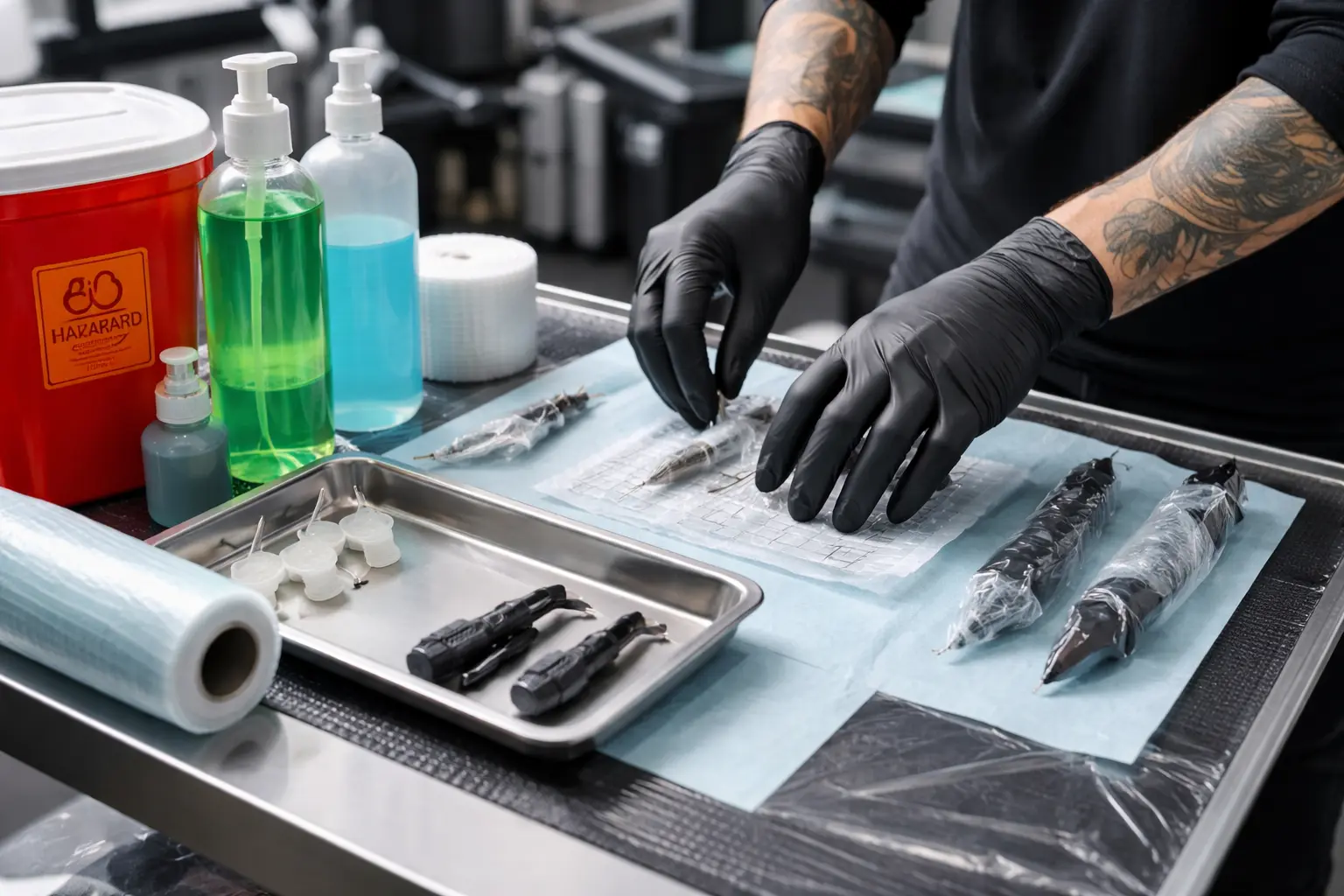
- Engineering Controls: Devices that isolate or remove the bloodborne pathogens hazard from the workplace (e.g., sharps disposal containers).
- Work Practice Controls: Practices that reduce the likelihood of exposure by altering the manner in which a task is performed.
Why Annual Training is Required
OSHA requires that employers provide training to workers with occupational exposure at the time of initial assignment and at least annually thereafter. The training must be comprehensive and include information on bloodborne pathogens, the OSHA standard, and the employer's exposure control plan.
By staying compliant and educated, you ensure a safe environment for your artistic expression to thrive.